Real growth strategy from a startup CMO: The frameworks, interviews, & honest insights that 100k+ founders and operators actually use. The weekly newsletter by Lillian Pierson that cuts through the noise and gets straight to what works.
How I used Semrush AI Search Health to turn a site audit into a 90-day plan
Published 2 months ago • 2 min read
The truth is, Reader, most AI search advice I see out there starts and ends with the same wrong instruction: just publish more content.
So when my YouTube strategist asked me for a video on using AI to get leads from AI search, I was excited for the chance to break down how it’s done properly.
Growth surfaces need to be continually realigned when the discovery layer changes shape as much as it has in recent years. I've built organic channels to a 750K+ audience size without spending a dollar on ads, so - naturally - this topic is near-and-dear to my heart.
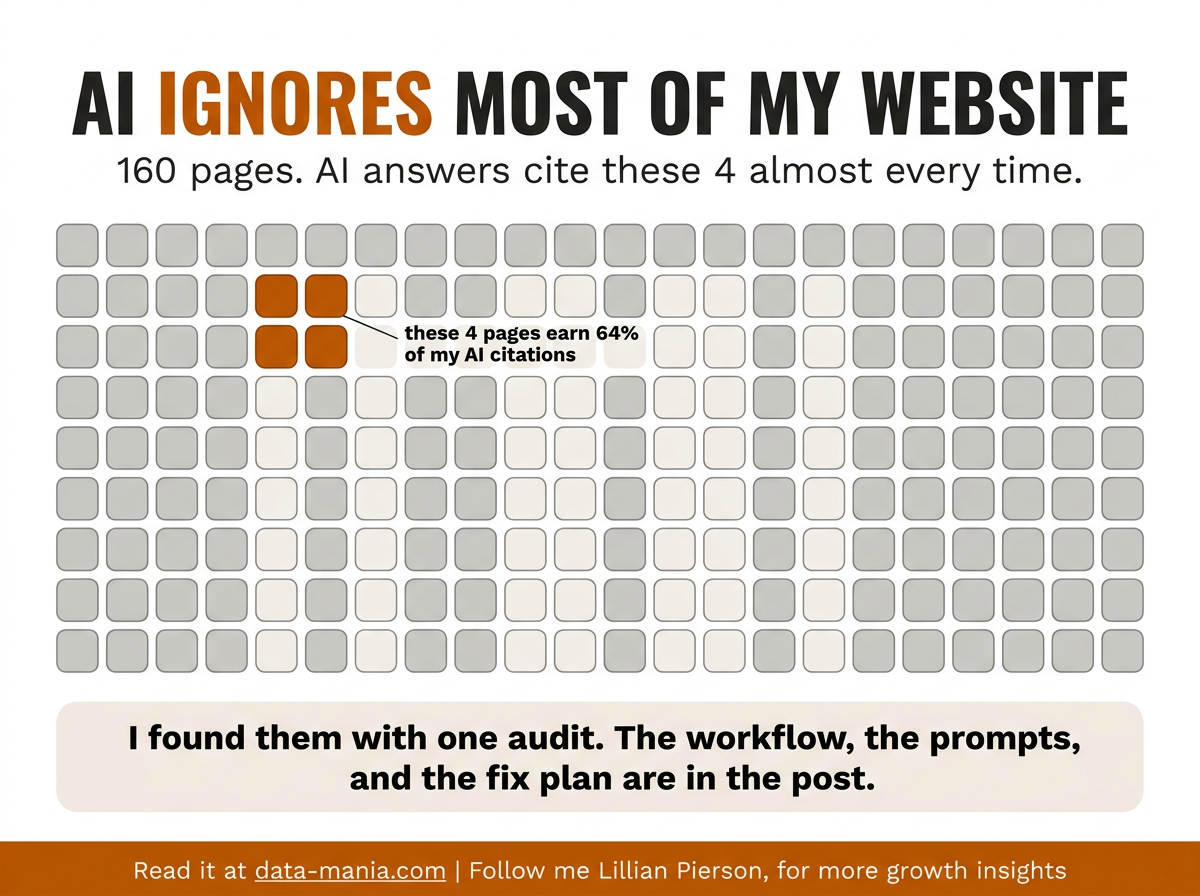
I had a filming date locked for this week, and my dashboards all looked healthy. 318,850 citations across 160 URLs. 9th in my competitive set for brand presence inside AI answers. Nothing screaming for attention.
To start the audit process I, of course, pulled the actual reports with the detailed data I needed to get this right (instead of trusting these summary numbers).
What the audit found reordered my entire Q3 content plan (spoiler alert: the reorder had almost nothing to do with writing more).
Claude Cowork, used for synthesis, planning, and execution of approved site changes
Pew Research Center, "Google users are less likely to click on links when an AI summary appears in the results," July 22, 2025
BIGGEST TAKEAWAYS
The thing that stuck with me most is how easily a healthy AI search score hides a structural story.
Readiness vs. Citations: Don’t conflate high readiness scores (technical crawlability) with citation volume (visibility). They require different strategies, and focusing only on a dashboard score often masks flat performance.
Fix Concentration, Not Gaps: If a small number of pages drive the majority of citations, prioritize strengthening those existing, high-demand pages rather than publishing new content to fill gaps.
Optimize for Intent: Prioritize content that’s aligned with commercial and comparison intent. If nearly 60% of your activity centers on buying questions, redirect your focus to those high-value topics.
Prioritize Anchor Text: Improving anchor text is a high-leverage fix. It makes site relationships legible to AI systems, which you can control directly.
Validate Crawler Warnings: Investigate specific URLs flagged by audit tools before acting. Some "errors" are actually systems functioning correctly by blocking administrative pages.
Optimize Workflow Splits: Use AI for execution tasks (anchor replacements, schema, deployments) while retaining human control over strategic decisions (redirects, canonicals, QA) to move bottlenecks to the approval stage.
Separate Volume from Value: Citation counts measure volume, not quality or sentiment. Track readiness and actual business outcomes (qualified conversations) separately to avoid false correlations.
Audit Before Publishing: For lean teams, a site audit often reveals that the best next move is updating existing content rather than commissioning new articles.
Practical GTM Engineering, AI Workflows & Growth Strategy For Tech Startups
Real growth strategy from a startup CMO: The frameworks, interviews, & honest insights that 100k+ founders and operators actually use. The weekly newsletter by Lillian Pierson that cuts through the noise and gets straight to what works.